Stay at Mackay House
Mackay House - A Serene Haven for Your Next Getaway
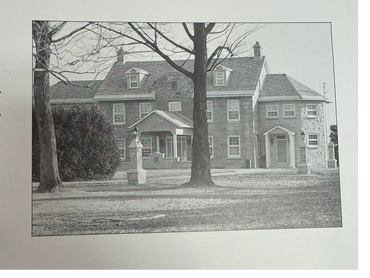
A Living Piece of Outaouais History: The Maison MacKay-Wright at 1210 Chemin d'Aylmer
Welcome to one of Gatineau's most storied landmarks — the Maison MacKay-Wright, a grand Georgian-inspired stone manor built in 1857 and lovingly preserved as a municipal historic monument since 1997. Set back from the historic Chemin d'Aylmer on expansive landscaped grounds with a monumental tree-lined driveway, this estate home has witnessed the birth of a region, the rise of timber empires, and moments of royal hospitality.
The tale begins with Philemon Wright (1760–1839), the visionary American settler who founded Hull in 1800 and pioneered agriculture and lumber in the Outaouais. His youngest son, Ruggles Wright (1793–1863), became a lumber baron in his own right. In 1829, Ruggles engineered the first timber slide at Chaudière Falls — a groundbreaking innovation that transformed log transport and fueled the region's economy. At the peak of his success, he built this imposing residence on his vast Britannia Farm (part of over 1,500 acres along the Aylmer Road). Originally the farm manager's home under James Latchford, the stone structure quickly became the family seat, surrounded by barns, stables, carriage houses, and other outbuildings.
Upon Ruggles' death in 1863, the property passed to his son, William MacKay Wright (1840–1882). A trained lawyer, William served as Member of Parliament for Pontiac (1872–1878) and the first mayor of the newly formed Hull-South municipality (1879–1881). One of the home's most charming chapters unfolded in 1860 during the visit of the Prince of Wales (future King Edward VII). Neighbors, directed by James Latchford, worked through the night to erect a beautiful rustic arch right in front of the house. As the Prince's carriage passed en route to the Aylmer boat landing for a trip to Chats Falls, he stopped to offer personal thanks. Local young women filled the carriage with wildflowers from the woods, a spontaneous display of Canadian loyalty that became local legend.
After William's passing in 1882, the estate entered a new chapter. His widow sold the farm (renamed "Mayfair" by the buyer) to lumber and paper magnate Ezra Butler Eddy. It later passed through the Bessey family (Eddy's daughter Ella and heirs until the 1920s), brief ownership by Ormond Haycock, and then to Elbert Soper (son of Ottawa Electric Railway pioneer Warren Soper) from 1926 through the 1950s. In the 1970s, the home even served as the residence of the Argentine ambassador to Canada. By 1923, most agricultural lands had been transferred to the Chaudière Golf Club, leaving the house on its elegant core property.
In 1992, thoughtful east and west wing additions expanded the home while respecting its heritage character — earning a 1994 residential restoration award. Today, the legible Georgian features remain: a rectangular 2½-story stone volume, gable roof with dormers, symmetrical five-bay façade, monumental projecting central entrance with pediment, corner chains, and sash windows.
Designated for its profound ties to the Wright family's socio-economic legacy, its architectural elegance, and its place along the scenic post-1850 Chemin d'Aylmer route (once lined with grand homes that drew excursionists), Maison MacKay-Wright stands as a bridge between pioneer ambition and modern elegance.
Whether you're exploring its history, admiring its grounds, or simply appreciating a piece of living heritage, we are proud to steward this landmark.

RICH IN HISTORY - OTTAWA/HULL
.jpeg/:/cr=t:0%25,l:0%25,w:100%25,h:100%25/rs=w:370,cg:true)

.jpeg/:/cr=t:2.17%25,l:0%25,w:97.83%25,h:97.83%25/rs=w:370,cg:true,m)